
Definitive laboratory guide · Gold Assaying
How Gold Assaying Works
A client-focused guide to sampling, Fire Assay, XRF Analysis, laboratory controls, and the report you receive at the end.
What this guide establishes
- A result is only as useful as the sample and chain of custody behind it.
- Fire Assay and XRF Analysis answer different questions and may be used together.
- A clear report identifies the sample, method, result, units, and important limitations.
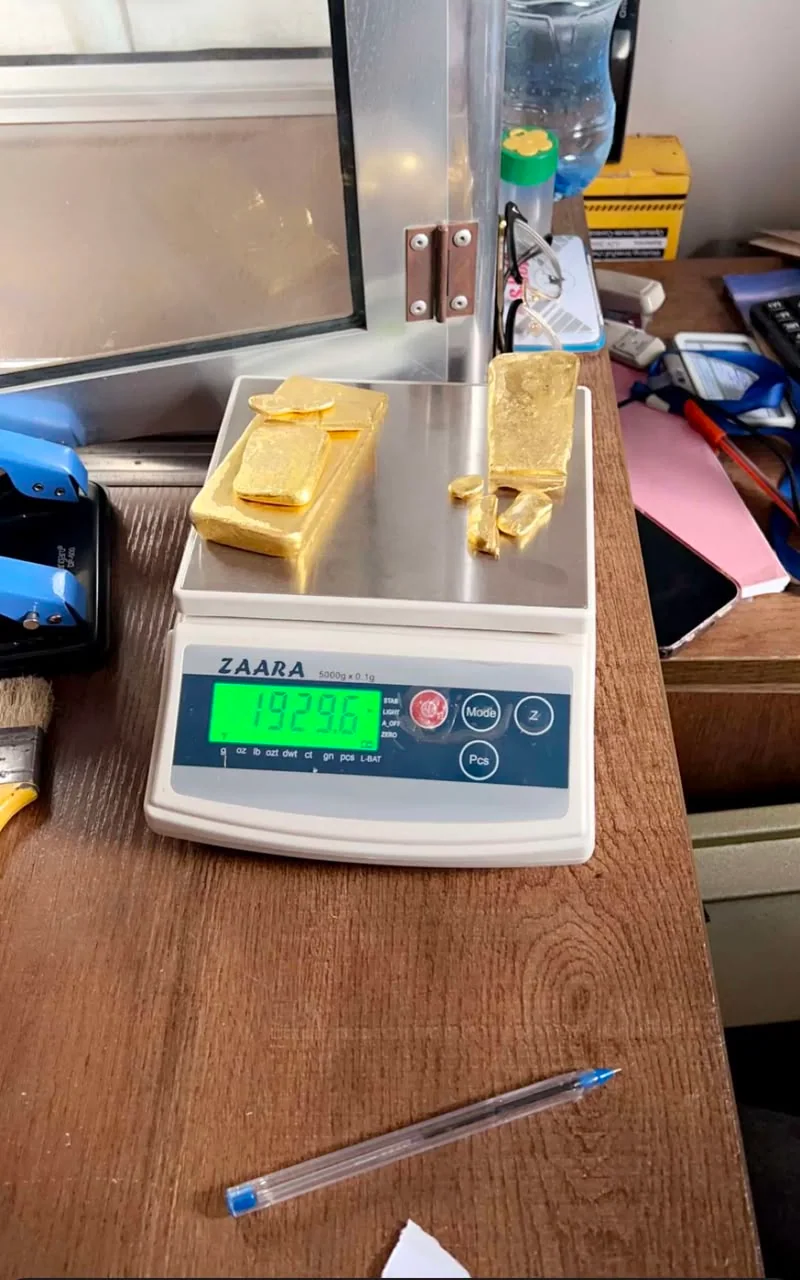
Gold assaying turns a commercial claim into measured evidence. The process begins before an instrument is used. It starts with the question you need answered, the sample that is submitted, and a clear record connecting that sample to the result. This guide explains the complete path from intake to reporting so buyers, exporters, miners, refiners, and investors can judge what an assay does and where its limits remain.
01
What a gold assay tells you
A gold assay measures the gold content of a submitted sample under stated laboratory conditions. Results may be reported as percentage, parts per thousand, fineness, or another agreed unit. The number describes the tested portion, not every unseen part of a bar, parcel, mine, or shipment.
For the client, the practical issue is scope. The result can support pricing, settlement, refining, quality control, or a decision to stop and investigate, but only when the reporting basis matches the commercial question. For buyers, exporters, miners, refiners, investors, and public institutions, that distinction helps determine whether the evidence is strong enough for the next commitment or whether more verification is needed.
In practice, the laboratory confirms the material received, records a client reference, agrees the method, and explains whether the work is screening or representative analysis. The work should be proportionate to the value, variability, geography, and consequence of getting the answer wrong. Responsibilities, timing, and decision points are clearer when they are agreed before money or material moves.
Useful records connect intake details, sample preparation, instrument or furnace work, calculations, and the final report so another reviewer can follow what was done. Records should be reviewed for consistency, not collected only to make a file look complete. Names, dates, weights, references, parties, and explanations should tell one coherent story.
An assay does not prove ownership, lawful origin, export approval, or the honesty of every party. Those questions require separate due diligence. That boundary matters because laboratory, customs, legal, financial, and commercial decisions belong to different qualified parties. A careful client uses each piece of evidence for the question it can genuinely answer.
A useful workflow starts by naming the decision, the person responsible for it, and the evidence that must exist before approval. The client can then separate mandatory requirements from useful supporting checks, record unresolved questions, and stop the process when a material inconsistency appears. This is more reliable than trying to reconstruct the reasoning after the transaction has advanced. Apply that discipline specifically to what a gold assay tells you so the control remains connected to the question this section addresses.
At the review point, write down what is confirmed, what remains an assumption, and what would change the decision. This short record helps legal, compliance, laboratory, logistics, and commercial advisers address the right questions without blurring their roles. It also gives the client a defensible reason to proceed, pause, renegotiate, or decline.
- Define the decision before choosing the method.
- Keep the sample reference on every record.
- Read the result together with the units and limitations.
- Do not treat laboratory evidence as transaction approval.
02
Why representative sampling comes first
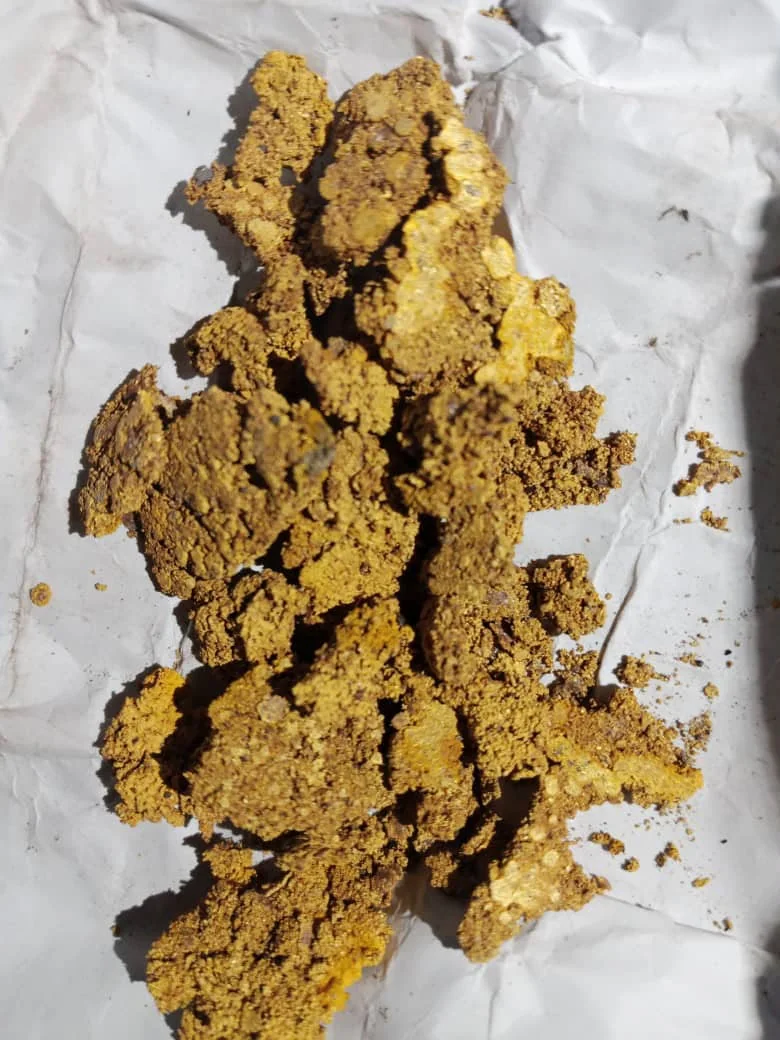
Gold-bearing material is not always uniform. A polished surface, the centre of a doré bar, and loose mineral material can contain different compositions. Representative sampling aims to give the laboratory a portion that fairly reflects the material the client wants to understand.
The commercial value comes from using the information correctly. Sampling risk can be larger than instrument error. A very precise measurement of an unrepresentative portion may create false confidence rather than reduce uncertainty. For buyers, exporters, miners, refiners, investors, and public institutions, that distinction helps determine whether the evidence is strong enough for the next commitment or whether more verification is needed.
In practice, depending on the item, the agreed approach may include multi-point screening, drilling, cutting, crushing, grinding, mixing, splitting, or retaining duplicate samples. The work should be proportionate to the value, variability, geography, and consequence of getting the answer wrong. Responsibilities, timing, and decision points are clearer when they are agreed before money or material moves.
Photographs, weights, seal numbers, sampling notes, witness names, and retained portions help show how the tested material relates to the wider lot. Records should be reviewed for consistency, not collected only to make a file look complete. Names, dates, weights, references, parties, and explanations should tell one coherent story.
No laboratory can make one small sample represent a large shipment unless the sampling plan was designed and carried out for that purpose. That boundary matters because laboratory, customs, legal, financial, and commercial decisions belong to different qualified parties. A careful client uses each piece of evidence for the question it can genuinely answer.
Before acting, the client should identify which party supplied each fact and which independent source, record, or test can verify it. Information from a seller may be necessary, but it should not be treated as independent confirmation. Where two records conflict, the conflict should be investigated and documented rather than explained away informally. Apply that discipline specifically to why representative sampling comes first so the control remains connected to the question this section addresses.
Evidence has a useful life and a defined scope. A document may be genuine but outdated, an assay may relate to a different sample, and an approval may apply only to a named party or route. Checking validity, scope, and direct connection to the current material prevents strong-looking evidence from being used for the wrong transaction.
03
Sample intake and chain of custody
Intake is the point where the laboratory records what arrived, from whom, in what condition, and for which purpose. Chain of custody is the documented path showing who controlled the sample from collection through preparation, analysis, storage, and return or disposal.
This step protects the connection between evidence and decision. A reliable result loses value if the parties cannot show that the reported sample is the same material that was collected or submitted. For buyers, exporters, miners, refiners, investors, and public institutions, that distinction helps determine whether the evidence is strong enough for the next commitment or whether more verification is needed.
In practice, clients should arrive with clear references, packaging, relevant seals, and the names of authorised witnesses. The laboratory assigns its own identifier and records exceptions. The work should be proportionate to the value, variability, geography, and consequence of getting the answer wrong. Responsibilities, timing, and decision points are clearer when they are agreed before money or material moves.
A strong file may include signed intake details, timestamps, photographs, transfer records, preparation logs, retained samples, and report issue records. Records should be reviewed for consistency, not collected only to make a file look complete. Names, dates, weights, references, parties, and explanations should tell one coherent story.
Chain of custody does not establish legal title. It documents control of the submitted sample, not ownership of a wider lot. That boundary matters because laboratory, customs, legal, financial, and commercial decisions belong to different qualified parties. A careful client uses each piece of evidence for the question it can genuinely answer.
Timing is part of the control. Reviews, sampling, testing, official enquiries, and third-party approvals should happen early enough for the client to respond to a problem without commercial pressure. A rushed final check is less useful when funds have moved, the shipment has departed, or contractual options have already narrowed. Apply that discipline specifically to sample intake and chain of custody so the control remains connected to the question this section addresses.
Good communication is specific. Questions should refer to the exact lot, sample seal, report number, licence, invoice, shipment, party, and date concerned. Answers should be retained with the transaction file. This makes later reconciliation easier and reduces the risk that a verbal assurance is mistaken for formal evidence.
04
Sample preparation inside the laboratory
Preparation makes the analytical portion suitable for the chosen method. Metallic material may be drilled or cut. Ore, concentrates, or heterogeneous material may need crushing, grinding, homogenising, and splitting before a test portion is weighed.
The point is not to add paperwork. It is to reduce avoidable uncertainty. Preparation affects whether the result describes one surface point or a more representative portion of the material. It also determines how much sample is consumed. For buyers, exporters, miners, refiners, investors, and public institutions, that distinction helps determine whether the evidence is strong enough for the next commitment or whether more verification is needed.
In practice, the preparation plan should match the material and desired confidence. Equipment is cleaned between samples, weights are recorded, and portions are controlled to reduce mix-ups or contamination. The work should be proportionate to the value, variability, geography, and consequence of getting the answer wrong. Responsibilities, timing, and decision points are clearer when they are agreed before money or material moves.
Preparation records show the original weight, operations performed, analytical portion, residues, and any retained reference sample. Records should be reviewed for consistency, not collected only to make a file look complete. Names, dates, weights, references, parties, and explanations should tell one coherent story.
No preparation step can correct a sample that was biased before it reached the laboratory. Collection and preparation must be considered together. That boundary matters because laboratory, customs, legal, financial, and commercial decisions belong to different qualified parties. A careful client uses each piece of evidence for the question it can genuinely answer.
The process should also allow escalation. A routine check may be enough for familiar, low-risk material, while unfamiliar parties, unusual payment requests, inconsistent weights, complex routes, or high values justify deeper review. Escalation is not an accusation. It is a proportionate response to uncertainty. Apply that discipline specifically to sample preparation inside the laboratory so the control remains connected to the question this section addresses.
If specialist interpretation is needed, use the appropriate qualified adviser. Laboratory staff can explain analytical scope, while authorities and legal, customs, financial, or logistics professionals address requirements within their own mandates. Coordinating those answers is more dependable than expecting one report or one organisation to validate the entire transaction.
05
How Fire Assay measures gold
Fire Assay uses a weighed test portion, fluxes, high-temperature fusion, collection, and cupellation to separate precious metals from much of the surrounding material. The recovered bead is then measured using the laboratory's stated finish and calculation procedure.
For the client, the practical issue is scope. The method is widely used when a buyer, seller, miner, or refiner needs a dependable result from a prepared sample rather than a surface indication. For buyers, exporters, miners, refiners, investors, and public institutions, that distinction helps determine whether the evidence is strong enough for the next commitment or whether more verification is needed.
In practice, the laboratory chooses flux chemistry, furnace conditions, controls, and repetitions that fit the sample. The process consumes part of the submitted material and takes longer than rapid screening. The work should be proportionate to the value, variability, geography, and consequence of getting the answer wrong. Responsibilities, timing, and decision points are clearer when they are agreed before money or material moves.
Weights, batch records, reference materials, duplicates, blanks where relevant, furnace records, and calculation checks support confidence in the reported value. Records should be reviewed for consistency, not collected only to make a file look complete. Names, dates, weights, references, parties, and explanations should tell one coherent story.
Fire Assay accuracy depends on sound sampling, preparation, technique, and quality control. Calling it the reference method does not remove those responsibilities. That boundary matters because laboratory, customs, legal, financial, and commercial decisions belong to different qualified parties. A careful client uses each piece of evidence for the question it can genuinely answer.
A useful workflow starts by naming the decision, the person responsible for it, and the evidence that must exist before approval. The client can then separate mandatory requirements from useful supporting checks, record unresolved questions, and stop the process when a material inconsistency appears. This is more reliable than trying to reconstruct the reasoning after the transaction has advanced. Apply that discipline specifically to how fire assay measures gold so the control remains connected to the question this section addresses.
At the review point, write down what is confirmed, what remains an assumption, and what would change the decision. This short record helps legal, compliance, laboratory, logistics, and commercial advisers address the right questions without blurring their roles. It also gives the client a defensible reason to proceed, pause, renegotiate, or decline.
06
How XRF Analysis screens gold
X-ray fluorescence measures the elemental response produced when a sample is exposed to X-rays. It can identify and estimate several elements quickly without removing or consuming a test portion, which makes it useful for intake screening and comparison across points.
The commercial value comes from using the information correctly. XRF helps a client see whether a surface is broadly consistent with a claim and whether further sampling is justified before a higher-value decision. For buyers, exporters, miners, refiners, investors, and public institutions, that distinction helps determine whether the evidence is strong enough for the next commitment or whether more verification is needed.
In practice, the operator considers calibration, surface preparation, reading time, geometry, and multiple measurement points. Results are interpreted alongside appearance, weight, and the client's objective. The work should be proportionate to the value, variability, geography, and consequence of getting the answer wrong. Responsibilities, timing, and decision points are clearer when they are agreed before money or material moves.
Instrument checks, calibration information, reading locations, repeated measurements, and recorded spectra help explain how the screening result was reached. Records should be reviewed for consistency, not collected only to make a file look complete. Names, dates, weights, references, parties, and explanations should tell one coherent story.
XRF mainly reads the surface region. Plating, contamination, roughness, and a non-uniform interior can make one reading misleading. That boundary matters because laboratory, customs, legal, financial, and commercial decisions belong to different qualified parties. A careful client uses each piece of evidence for the question it can genuinely answer.
Before acting, the client should identify which party supplied each fact and which independent source, record, or test can verify it. Information from a seller may be necessary, but it should not be treated as independent confirmation. Where two records conflict, the conflict should be investigated and documented rather than explained away informally. Apply that discipline specifically to how xrf analysis screens gold so the control remains connected to the question this section addresses.
Evidence has a useful life and a defined scope. A document may be genuine but outdated, an assay may relate to a different sample, and an approval may apply only to a named party or route. Checking validity, scope, and direct connection to the current material prevents strong-looking evidence from being used for the wrong transaction.
07
Accuracy, uncertainty, and repeatability
Accuracy describes closeness to an accepted value. Repeatability describes how closely repeated measurements agree under similar conditions. Measurement uncertainty expresses the range within which the result is reasonably expected to lie, based on known sources of variation.
This step protects the connection between evidence and decision. Commercial decisions should not treat the last displayed decimal as absolute truth. The material, sampling plan, method, and reporting precision all affect what difference is meaningful. For buyers, exporters, miners, refiners, investors, and public institutions, that distinction helps determine whether the evidence is strong enough for the next commitment or whether more verification is needed.
In practice, a laboratory uses reference materials, duplicate work, control charts, equipment checks, and reviewed calculations to monitor performance and identify results that need investigation. The work should be proportionate to the value, variability, geography, and consequence of getting the answer wrong. Responsibilities, timing, and decision points are clearer when they are agreed before money or material moves.
Quality-control results and documented acceptance criteria provide stronger support than a claim that equipment is simply accurate. Records should be reviewed for consistency, not collected only to make a file look complete. Names, dates, weights, references, parties, and explanations should tell one coherent story.
A laboratory result cannot remove uncertainty from the wider transaction. It reduces analytical uncertainty for the submitted sample. That boundary matters because laboratory, customs, legal, financial, and commercial decisions belong to different qualified parties. A careful client uses each piece of evidence for the question it can genuinely answer.
Timing is part of the control. Reviews, sampling, testing, official enquiries, and third-party approvals should happen early enough for the client to respond to a problem without commercial pressure. A rushed final check is less useful when funds have moved, the shipment has departed, or contractual options have already narrowed. Apply that discipline specifically to accuracy, uncertainty, and repeatability so the control remains connected to the question this section addresses.
Good communication is specific. Questions should refer to the exact lot, sample seal, report number, licence, invoice, shipment, party, and date concerned. Answers should be retained with the transaction file. This makes later reconciliation easier and reduces the risk that a verbal assurance is mistaken for formal evidence.
08
How to read an assay report
Begin with the sample identifier and description. Then check the method, result, units, date, reporting basis, and any comments. The report should state enough context for the reader to understand what was tested and what the number represents.
The point is not to add paperwork. It is to reduce avoidable uncertainty. Small differences in units, sample identity, or method can create large financial differences when a lot is valuable. A report should be read before payment or settlement terms are finalised. For buyers, exporters, miners, refiners, investors, and public institutions, that distinction helps determine whether the evidence is strong enough for the next commitment or whether more verification is needed.
In practice, ask the laboratory to explain unclear units, qualifiers, detection limits, or differences between preliminary and final results. Compare the report with the physical sample and transaction file. The work should be proportionate to the value, variability, geography, and consequence of getting the answer wrong. Responsibilities, timing, and decision points are clearer when they are agreed before money or material moves.
Controlled report numbers, authorised issue, revision history, and direct verification with the issuing laboratory help protect against altered or unrelated documents. Records should be reviewed for consistency, not collected only to make a file look complete. Names, dates, weights, references, parties, and explanations should tell one coherent story.
A genuine report can still be misused for a different bar or shipment. Document authenticity and sample identity are separate checks. That boundary matters because laboratory, customs, legal, financial, and commercial decisions belong to different qualified parties. A careful client uses each piece of evidence for the question it can genuinely answer.
The process should also allow escalation. A routine check may be enough for familiar, low-risk material, while unfamiliar parties, unusual payment requests, inconsistent weights, complex routes, or high values justify deeper review. Escalation is not an accusation. It is a proportionate response to uncertainty. Apply that discipline specifically to how to read an assay report so the control remains connected to the question this section addresses.
If specialist interpretation is needed, use the appropriate qualified adviser. Laboratory staff can explain analytical scope, while authorities and legal, customs, financial, or logistics professionals address requirements within their own mandates. Coordinating those answers is more dependable than expecting one report or one organisation to validate the entire transaction.
Clear answers before the next step.
What Is an Assay Certificate?
An assay certificate or report records a laboratory's finding for an identified sample using a stated method. Its value comes from the connection between sample identity, analytical work, and authorised reporting. Check the report number directly with the issuing laboratory and compare every sample reference with the material and chain-of-custody file. A genuine certificate does not prove ownership, lawful origin, or that an entire shipment matches the tested sample. The appropriate response depends on the material, jurisdiction, parties, value, and intended use, so buyers, exporters, miners, refiners, investors, and public institutions should confirm transaction-specific requirements before acting.
How Long Does Gold Testing Take?
Turnaround depends on sample preparation, method, number of samples, quality-control requirements, and the type of report requested. XRF screening can be quicker, while Fire Assay requires a controlled laboratory sequence. Confirm timing before delivery and tell the laboratory if witnesses, duplicate samples, or transaction deadlines are involved. A promised result time has little value if the sample has not been received, registered, or prepared correctly. The appropriate response depends on the material, jurisdiction, parties, value, and intended use, so buyers, exporters, miners, refiners, investors, and public institutions should confirm transaction-specific requirements before acting.
How Is a Gold Sample Prepared?
Preparation creates a test portion suited to the method and the client's question. Metallic bars may be drilled or cut, while mineral material may need crushing, grinding, homogenising, and careful splitting. Agree how much material may be consumed and whether a sealed reference portion should be retained. Preparation cannot correct a biased sample collected from the wrong place or from only the most favourable material. The appropriate response depends on the material, jurisdiction, parties, value, and intended use, so buyers, exporters, miners, refiners, investors, and public institutions should confirm transaction-specific requirements before acting.
Why Sampling Determines Assay Quality?
The assay result describes the material that reaches the analytical step. If the collected portion does not reflect the wider bar, batch, or shipment, the result may be precise but commercially misleading. Document where increments came from and use a sampling plan proportionate to the value and variability of the lot. One convenient piece or surface point should not be described as representative without a defensible basis. The appropriate response depends on the material, jurisdiction, parties, value, and intended use, so buyers, exporters, miners, refiners, investors, and public institutions should confirm transaction-specific requirements before acting.
How to Read a Gold Assay Report?
Read the report from identity to method, then result, units, comments, and authorised issue. This order keeps the number connected to the sample and analytical context. Ask the laboratory to explain any abbreviation, qualifier, correction, or revised page before using the result commercially. Do not compare two numbers until you know they use the same sample basis and units. The appropriate response depends on the material, jurisdiction, parties, value, and intended use, so buyers, exporters, miners, refiners, investors, and public institutions should confirm transaction-specific requirements before acting.
What Does Laboratory Accuracy Mean?
Accuracy concerns closeness to an accepted value. Repeatability concerns agreement between repeated results. Both depend on sampling, preparation, calibration, controls, and competent interpretation. Ask what quality-control checks support the method rather than relying on a marketing claim about accuracy. Instrument precision does not prove that the tested portion represents the complete transaction lot. The appropriate response depends on the material, jurisdiction, parties, value, and intended use, so buyers, exporters, miners, refiners, investors, and public institutions should confirm transaction-specific requirements before acting.
Can One Sample Represent a Shipment?
One composite sample may represent a shipment only when it was collected under a suitable sampling plan from a defined and controlled lot. A random bar or loose piece normally represents itself. Agree the lot definition, increment pattern, witness arrangements, and sealing procedure before collection begins. A laboratory cannot expand the meaning of a result after receiving an unrepresentative sample. The appropriate response depends on the material, jurisdiction, parties, value, and intended use, so buyers, exporters, miners, refiners, investors, and public institutions should confirm transaction-specific requirements before acting.
What Happens to a Sample After Testing?
XRF usually leaves the item intact. Fire Assay and some preparation steps consume material. Remaining portions may be returned, retained for an agreed period, or handled under laboratory policy. Confirm return, retention, disposal, and collection arrangements at intake, especially for valuable or disputed material. Do not assume every portion can be returned in its original condition after destructive analysis. The appropriate response depends on the material, jurisdiction, parties, value, and intended use, so buyers, exporters, miners, refiners, investors, and public institutions should confirm transaction-specific requirements before acting.
What is the most accurate way to test gold purity?
For a representative prepared sample and a bulk gold determination, Fire Assay is widely used as the reference approach. The quality of sampling and laboratory controls remains essential. Explain the material and decision to the laboratory before requesting a method. No method can describe material that was not represented in the sample. The appropriate response depends on the material, jurisdiction, parties, value, and intended use, so buyers, exporters, miners, refiners, investors, and public institutions should confirm transaction-specific requirements before acting.
How is gold purity measured internationally?
Gold purity is commonly expressed as fineness in parts per thousand, percentage, or karat. Commercial documents should state the unit clearly. Convert units carefully and keep the original reported value in the transaction file. Do not assume that 24 karat and 9999 fineness are identical claims. The appropriate response depends on the material, jurisdiction, parties, value, and intended use, so buyers, exporters, miners, refiners, investors, and public institutions should confirm transaction-specific requirements before acting.
Can a laboratory verify a report issued elsewhere?
The original laboratory may confirm whether it issued a report, while a new laboratory can independently test a new sample. Contact the issuer through independently verified details and arrange fresh sampling when risk is material. Document authentication is not the same as confirming that the present material matches the old sample. The appropriate response depends on the material, jurisdiction, parties, value, and intended use, so buyers, exporters, miners, refiners, investors, and public institutions should confirm transaction-specific requirements before acting.
Should buyers attend the testing process?
Witnessing may be useful where sampling or identity is commercially important. The laboratory should explain which areas and steps can be observed safely. Agree witness names, access, sample seals, and reporting before the appointment. Attendance does not replace proper records or laboratory quality control. The appropriate response depends on the material, jurisdiction, parties, value, and intended use, so buyers, exporters, miners, refiners, investors, and public institutions should confirm transaction-specific requirements before acting.