
Coarse-Gold Ore
Address material in which coarse particulate gold can cause strong variation between small aliquots.
Specialized Gold Testing Method
Gold Determination for Coarse & Heterogeneous Gold-Bearing Material
Metallic-screen, or screen, Fire Assay is a specialised approach for gold-bearing material in which coarse gold can make a small analytical portion unrepresentative.
It uses a larger prepared sample and accounts separately for coarse and fine fractions before a combined gold result is calculated.
Bilex confirms method availability, required sample mass and preparation from the applicable procedure rather than applying a generic industry value.
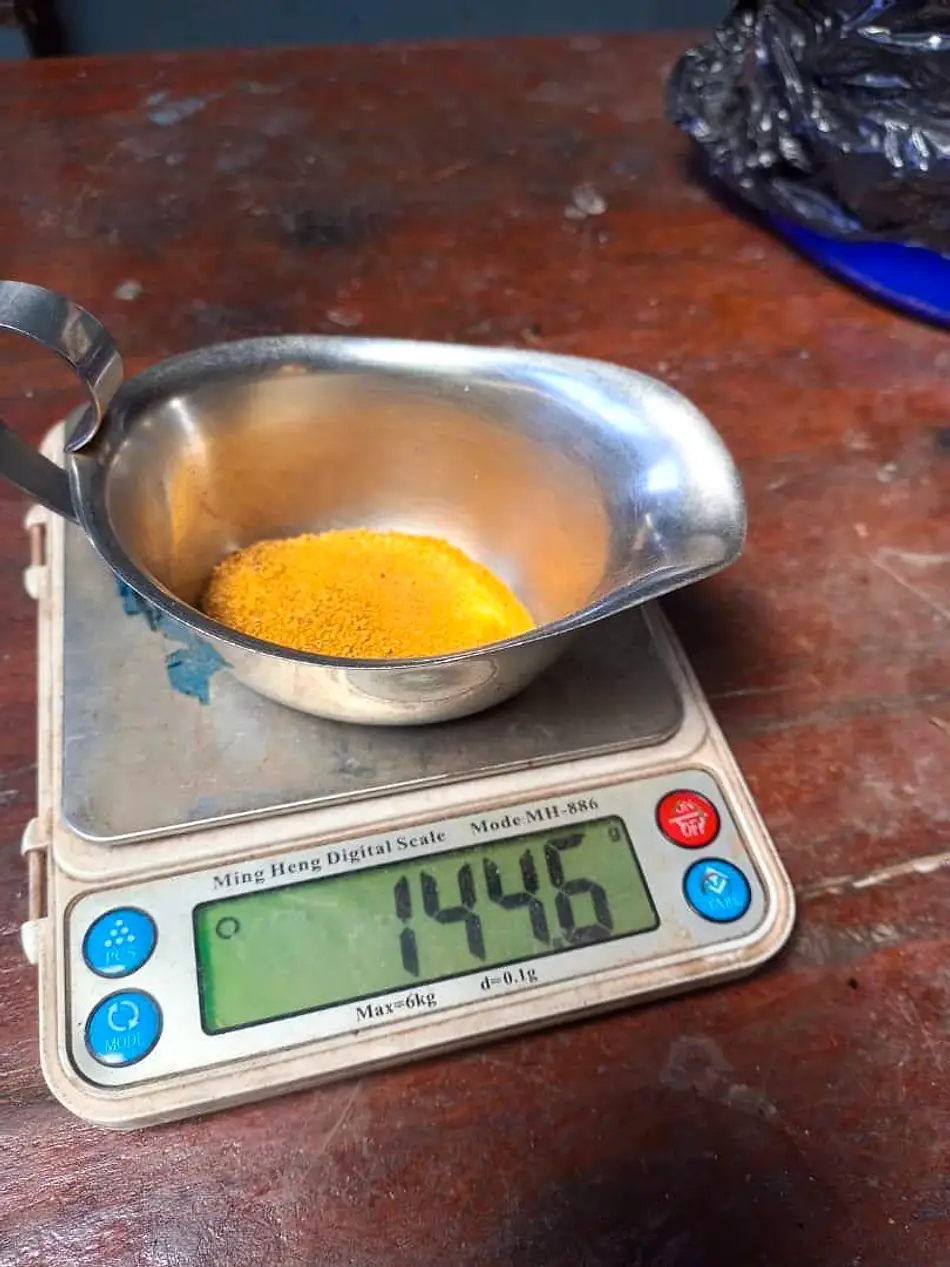
Conventional Fire Assay commonly analyses a relatively small aliquot of a prepared sample. Where gold occurs as coarse particles, different small aliquots can contain very different amounts of gold and may not describe the material consistently.
Metallic-screen Fire Assay addresses this heterogeneity by analysing a substantially larger prepared sample. The material is screened at an appropriate particle size, the coarse and fine fractions are accounted for separately, and their results and weights are combined.
The technical term ‘nugget effect’ describes variation caused by coarse particulate gold in a sample. It does not mean that a parcel of intact natural nuggets should automatically be processed by metallic-screen Fire Assay.
Applications
Address material in which coarse particulate gold can cause strong variation between small aliquots.
Use a larger prepared sample where gold distribution is not sufficiently uniform for routine aliquots.
Account separately for coarse and fine fractions when the material shows significant particulate heterogeneity.
Apply only where the concentrate form and validated procedure support metallic screening.
Suitable material
Before testing
Process
Obtain a larger representative prepared sample connected to the defined material.
Separate coarse and fine fractions at the particle size stated by the confirmed procedure.
Record the weights and keep the coarse and fine fractions separately identified.
Analyse the fractions according to the validated Fire Assay procedure.
Use the fraction results and weights to determine the combined gold result for the tested sample.
What it contributes
Scope
Method selection
Both use Fire Assay determination, but metallic screening begins with a larger prepared sample and separates coarse and fine fractions to address particulate gold distribution.
A conventional aliquot may be suitable for more homogeneous prepared material. Method selection should follow evidence about the material, not a blanket preference for a larger sample.
Both may be considered for suitable coarse-gold geological material. Metallic-screen Fire Assay is destructive and separately accounts for screened fractions.
PhotonAssay makes a non-destructive bulk measurement through a suitable prepared sample within a validated application and range. They are not interchangeable by name alone.
Questions
It is a specialised Fire Assay approach that uses a larger prepared sample, separates coarse and fine fractions and combines their contributions to address coarse-gold heterogeneity.
It is the sampling variation caused when coarse particulate gold is distributed unevenly through material. It is not the same as a parcel of intact natural nuggets.
A larger prepared sample improves the opportunity to account for coarse gold particles that may be missed or overrepresented in a small aliquot.
It is primarily designed for coarse and heterogeneous gold-bearing material and is not normally required for homogeneous finished bullion.
The required mass depends on the confirmed Bilex procedure and material. Bilex should state it for the specific enquiry rather than relying on a generic industry value.
Related services
Discuss the sample
Tell us the material, available sample quantity and the information the result needs to establish.
The final method and sample requirements are confirmed after the material and testing objective have been reviewed.