Bilex Minerals EABilex

Fire Assay

Fire Assay Gold Testing

Representative precious-metal determination from a prepared sample for suitable bullion, doré, ore and concentrate materials.

Bilex uses Fire Assay where the testing requirement calls for representative quantitative gold analysis.

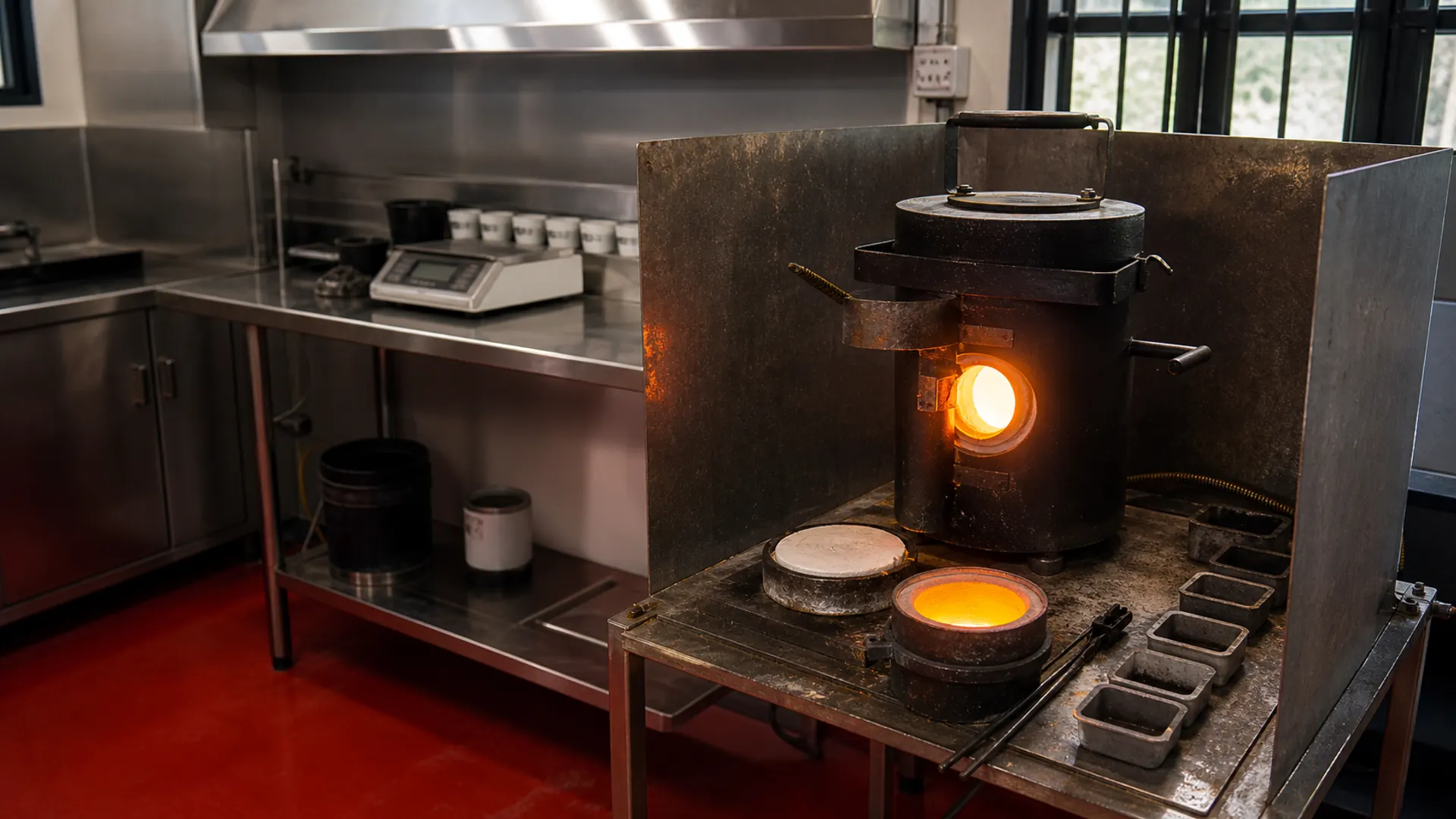
Bilex Minerals EA Fire Assay laboratory process

Overview

A method built around separation

Fire Assay remains one of the most established methods for determining gold because the process physically separates precious metals from much of the material that surrounds them. The exact preparation changes with the sample. Ore is not prepared like doré, and doré is not handled like a finished bar that can only be sampled in an agreed way.

When the sample is ore or concentrate

Geological material first has to become representative enough for a small analytical portion to mean something. Depending on the material, preparation can include drying, crushing, splitting, pulverising and homogenising before the assay charge is weighed.

The weighed portion is mixed with a flux system and a collector, commonly lead for gold analysis, then heated in a furnace at a temperature high enough to form a molten charge. The gangue forms a slag while the precious metals are collected into a dense metallic button.

From the lead button to a precious metal bead

After the fusion has cooled, the lead button is separated from the slag and placed on a cupel. During cupellation the lead oxidises and is absorbed into the cupel, while the precious metals remain as a small bead.

That bead can be weighed directly under an appropriate gravimetric procedure or dissolved for an instrumental finish such as AAS, ICP OES or ICP MS. The finish is selected according to the concentration range, the requested analytes and the reporting requirement.

Doré and bullion follow a different route

Doré and bullion are already metallic and do not need the same geological fusion preparation used for ore. A representative metallic sample is first obtained using the agreed sampling approach. For doré and high grade gold, the weighed assay portion can be cupelled with the appropriate additions.

Where gold and silver need to be separated, the resulting bead is parted using nitric acid under the applicable procedure. Silver is dissolved while gold remains as metal. The gold is then dried, annealed and weighed for the gravimetric determination. Appropriate proof or reference materials are run with the assay so that method losses can be accounted for.

Gold and silver reporting

Bilex can include silver when it forms part of the requested scope. The way silver is determined depends on the material and analytical finish. Gold and silver results should always be read with the sample identity, units and method stated on the report.

Why sampling still controls the meaning of the result

Fire Assay can be highly precise, but it cannot correct an unrepresentative sample. A perfect assay of a poor sample is still only a precise description of the wrong portion. For doré, bullion lots, ore parcels and concentrate lots, the sampling relationship should be agreed before the material is altered.

Destructive testing should be deliberate

Fire Assay consumes the analytical portion. Before work begins, the parties should understand what will be sampled, how much material is required, whether sampling will be witnessed, what will be retained and what the final report is expected to represent.

When Fire Assay Is Used

Doré

Representative gold determination from a prepared metallic sample.

Ore & Concentrates

Analysis following appropriate sample preparation and homogenisation.

Other Suitable Gold Materials

Representative analysis where an agreed sample can be taken and consumed.

From Sample to Result

01

Prepare

The sample is prepared according to the material.

02

Collect

Precious metals are separated through the Fire Assay process.

03

Measure

The collected precious-metal fraction is measured using the agreed finish.

04

Report

The result is issued against the tested sample and method.

What a Fire Assay Report Tells You

The report records the gold result for the identified prepared sample and the analytical finish used. It can support representative fineness determination, but it does not establish ownership, source or the composition of material that the sample did not represent.

When making an enquiry, provide the material form, approximate quantity, testing objective and any available sampling or preparation information. State whether destructive sampling is permitted and whether the result needs a particular instrumental finish, such as AAS analysis.

Coarse or strongly heterogeneous gold-bearing material may require a larger or differently prepared test portion. Review Metallic-Screen Fire Assay when particulate gold could make a routine aliquot unrepresentative.

Representative Sampling Matters

Fire Assay measures the prepared analytical sample. For larger lots and geological material, representative sampling and preparation are essential to producing a useful result.

Discuss Fire Assay Testing

Tell us the material, approximate quantity and information you need to establish.

Book Fire Assay Testing