
Definitive method comparison · Testing Methods
Fire Assay vs XRF Testing
Compare accuracy, speed, sample damage, surface limitations, and the situations where each method gives the most useful answer.
What this guide establishes
- XRF is fast and non-destructive, but surface condition and calibration matter.
- Fire Assay consumes a prepared portion and is preferred for representative bulk determination.
- High-value decisions often justify screening first and confirmatory testing second.
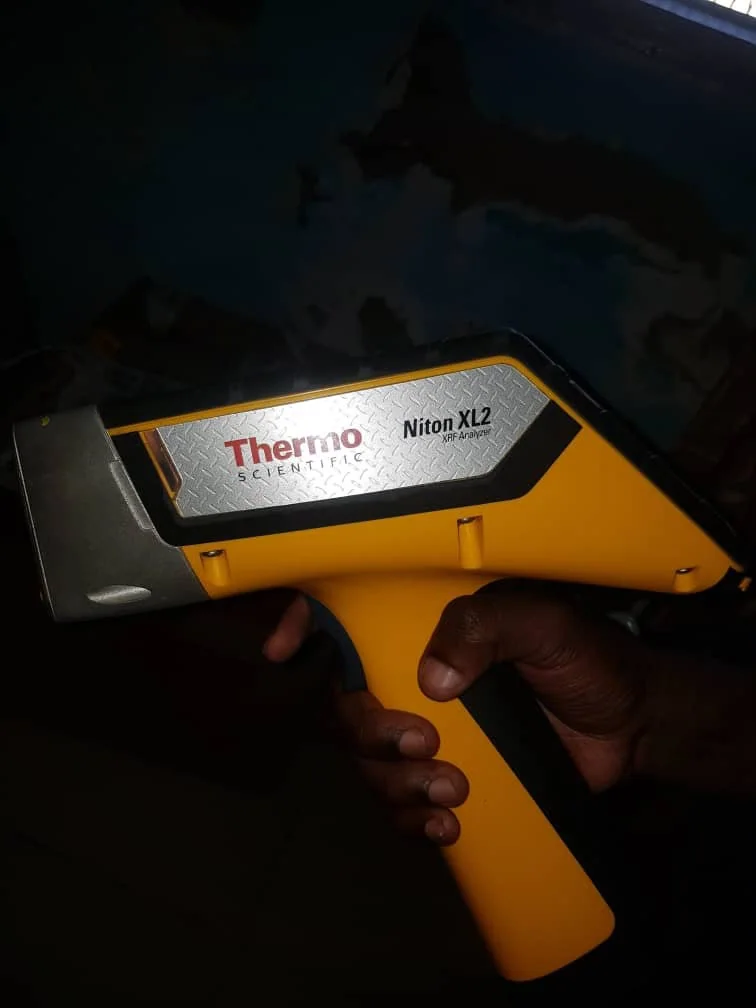
Fire Assay and XRF Analysis are not competing versions of the same test. Fire Assay measures a prepared sample through a controlled separation process. XRF provides a rapid elemental reading from the surface region. The best choice depends on the material, the decision, and the risk of relying on a result that is too narrow for the transaction.
01
The core difference between the methods
XRF interprets X-rays returned by elements in the surface region. Fire Assay separates precious metals from a weighed, prepared test portion through fusion and cupellation. One preserves the item and gives rapid information. The other consumes material and provides a result from the prepared portion.
For the client, the practical issue is scope. The choice changes what the result can support. Surface screening and settlement analysis are different tasks, even when both produce a gold number. For gold buyers, jewellery manufacturers, miners, exporters, refiners, and investors, that distinction helps determine whether the evidence is strong enough for the next commitment or whether more verification is needed.
In practice, the laboratory asks about material form, value, permitted damage, required confidence, and whether the client needs preliminary screening or a report for a commercial decision. The work should be proportionate to the value, variability, geography, and consequence of getting the answer wrong. Responsibilities, timing, and decision points are clearer when they are agreed before money or material moves.
Method records should identify calibration or batch controls, sample location or preparation, readings or weights, and the reporting basis. Records should be reviewed for consistency, not collected only to make a file look complete. Names, dates, weights, references, parties, and explanations should tell one coherent story.
Neither method proves origin or ownership, and neither compensates for poor sample control. That boundary matters because laboratory, customs, legal, financial, and commercial decisions belong to different qualified parties. A careful client uses each piece of evidence for the question it can genuinely answer.
A useful workflow starts by naming the decision, the person responsible for it, and the evidence that must exist before approval. The client can then separate mandatory requirements from useful supporting checks, record unresolved questions, and stop the process when a material inconsistency appears. This is more reliable than trying to reconstruct the reasoning after the transaction has advanced. Apply that discipline specifically to the core difference between the methods so the control remains connected to the question this section addresses.
At the review point, write down what is confirmed, what remains an assumption, and what would change the decision. This short record helps legal, compliance, laboratory, logistics, and commercial advisers address the right questions without blurring their roles. It also gives the client a defensible reason to proceed, pause, renegotiate, or decline.
02
Fire Assay accuracy and representation
Fire Assay is commonly preferred for determining gold in a representative prepared sample. Accuracy depends on correct sampling, preparation, weighing, flux selection, furnace control, cupellation, finishing, calculations, and quality control.
The commercial value comes from using the information correctly. A buyer can place more weight on a Fire Assay result when the sample was collected and prepared to reflect the lot in question. For gold buyers, jewellery manufacturers, miners, exporters, refiners, and investors, that distinction helps determine whether the evidence is strong enough for the next commitment or whether more verification is needed.
In practice, parties should agree sampling, witness, duplicate, and retained-sample arrangements before material is altered or a transaction reaches settlement. The work should be proportionate to the value, variability, geography, and consequence of getting the answer wrong. Responsibilities, timing, and decision points are clearer when they are agreed before money or material moves.
Reference materials, repeat portions, control samples, accepted batch performance, and reviewed calculations support the result. Records should be reviewed for consistency, not collected only to make a file look complete. Names, dates, weights, references, parties, and explanations should tell one coherent story.
Fire Assay is not automatically representative of an entire bar or shipment. It represents the prepared portion derived from the agreed sample. That boundary matters because laboratory, customs, legal, financial, and commercial decisions belong to different qualified parties. A careful client uses each piece of evidence for the question it can genuinely answer.
Before acting, the client should identify which party supplied each fact and which independent source, record, or test can verify it. Information from a seller may be necessary, but it should not be treated as independent confirmation. Where two records conflict, the conflict should be investigated and documented rather than explained away informally. Apply that discipline specifically to fire assay accuracy and representation so the control remains connected to the question this section addresses.
Evidence has a useful life and a defined scope. A document may be genuine but outdated, an assay may relate to a different sample, and an approval may apply only to a named party or route. Checking validity, scope, and direct connection to the current material prevents strong-looking evidence from being used for the wrong transaction.
03
XRF accuracy and surface effects
XRF can provide repeatable elemental information when calibration, sample geometry, surface preparation, and reading conditions are controlled. It is particularly useful for metallic screening, alloy identification, and comparing several locations quickly.
This step protects the connection between evidence and decision. The method can identify obvious inconsistencies before destructive sampling, saving time and preserving material where a surface answer is enough. For gold buyers, jewellery manufacturers, miners, exporters, refiners, and investors, that distinction helps determine whether the evidence is strong enough for the next commitment or whether more verification is needed.
In practice, operators clean or prepare the area, take multiple readings, note locations, and compare the pattern rather than relying on a single favourable spot. The work should be proportionate to the value, variability, geography, and consequence of getting the answer wrong. Responsibilities, timing, and decision points are clearer when they are agreed before money or material moves.
Instrument checks, calibration mode, spectra, reading duration, and location records help another reviewer understand the result. Records should be reviewed for consistency, not collected only to make a file look complete. Names, dates, weights, references, parties, and explanations should tell one coherent story.
Plating, solder, contamination, curved surfaces, roughness, and a different interior composition can distort the commercial meaning of one reading. That boundary matters because laboratory, customs, legal, financial, and commercial decisions belong to different qualified parties. A careful client uses each piece of evidence for the question it can genuinely answer.
Timing is part of the control. Reviews, sampling, testing, official enquiries, and third-party approvals should happen early enough for the client to respond to a problem without commercial pressure. A rushed final check is less useful when funds have moved, the shipment has departed, or contractual options have already narrowed. Apply that discipline specifically to xrf accuracy and surface effects so the control remains connected to the question this section addresses.
Good communication is specific. Questions should refer to the exact lot, sample seal, report number, licence, invoice, shipment, party, and date concerned. Answers should be retained with the transaction file. This makes later reconciliation easier and reduces the risk that a verbal assurance is mistaken for formal evidence.
04
Testing bullion and doré bars
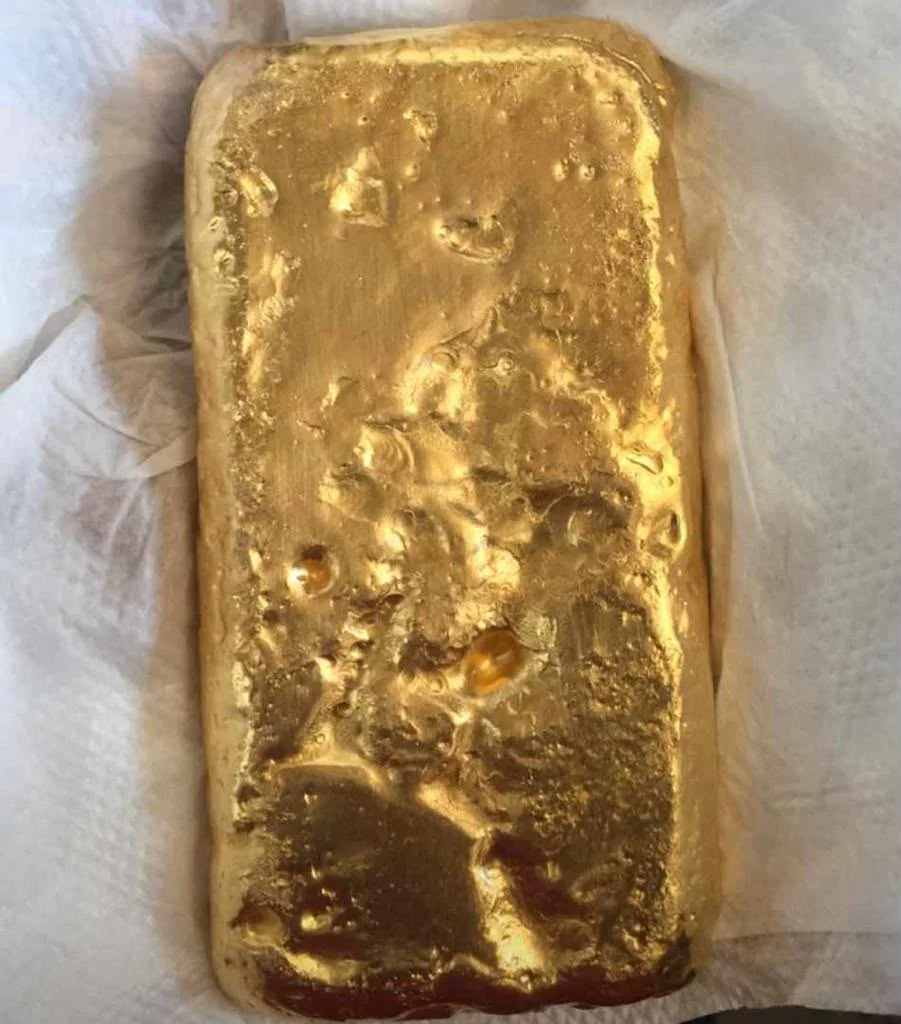
Bullion intended to be uniform may still require confirmation that the interior and surface agree. Doré is an intermediate product containing gold with other metals and can be visibly or internally heterogeneous.
The point is not to add paperwork. It is to reduce avoidable uncertainty. High-value bars deserve a staged approach that documents identity, screens several areas, and uses representative sampling when the decision requires a bulk result. For gold buyers, jewellery manufacturers, miners, exporters, refiners, and investors, that distinction helps determine whether the evidence is strong enough for the next commitment or whether more verification is needed.
In practice, weight and dimensions, visual examination, multi-point XRF, drilling or cutting under agreement, homogenisation, and Fire Assay may form part of one verification plan. The work should be proportionate to the value, variability, geography, and consequence of getting the answer wrong. Responsibilities, timing, and decision points are clearer when they are agreed before money or material moves.
Photographs, bar marks, weight records, reading maps, drill locations, sealed residues, and laboratory reports keep each step connected. Records should be reviewed for consistency, not collected only to make a file look complete. Names, dates, weights, references, parties, and explanations should tell one coherent story.
A stamp, serial number, or clean surface is not analytical evidence of interior composition. That boundary matters because laboratory, customs, legal, financial, and commercial decisions belong to different qualified parties. A careful client uses each piece of evidence for the question it can genuinely answer.
The process should also allow escalation. A routine check may be enough for familiar, low-risk material, while unfamiliar parties, unusual payment requests, inconsistent weights, complex routes, or high values justify deeper review. Escalation is not an accusation. It is a proportionate response to uncertainty. Apply that discipline specifically to testing bullion and doré bars so the control remains connected to the question this section addresses.
If specialist interpretation is needed, use the appropriate qualified adviser. Laboratory staff can explain analytical scope, while authorities and legal, customs, financial, or logistics professionals address requirements within their own mandates. Coordinating those answers is more dependable than expecting one report or one organisation to validate the entire transaction.
05
Testing jewellery and finished items
Jewellery may contain solder, plating, stones, hollow spaces, or different alloys in different parts. XRF can screen selected areas without damage. Destructive sampling may be inappropriate unless ownership and consent are clear.
For the client, the practical issue is scope. The method should reflect whether the client wants a non-destructive indication, hallmark review, manufacturing control, or a defensible result from sampled metal. For gold buyers, jewellery manufacturers, miners, exporters, refiners, and investors, that distinction helps determine whether the evidence is strong enough for the next commitment or whether more verification is needed.
In practice, the operator records the item, chooses accessible areas, takes several readings, and explains how construction may affect interpretation. The work should be proportionate to the value, variability, geography, and consequence of getting the answer wrong. Responsibilities, timing, and decision points are clearer when they are agreed before money or material moves.
Images, reading locations, hallmark notes, calibration information, and stated limitations make the report more useful. Records should be reviewed for consistency, not collected only to make a file look complete. Names, dates, weights, references, parties, and explanations should tell one coherent story.
A surface result from one component should not be presented as the purity of stones, inaccessible parts, or the entire finished item. That boundary matters because laboratory, customs, legal, financial, and commercial decisions belong to different qualified parties. A careful client uses each piece of evidence for the question it can genuinely answer.
A useful workflow starts by naming the decision, the person responsible for it, and the evidence that must exist before approval. The client can then separate mandatory requirements from useful supporting checks, record unresolved questions, and stop the process when a material inconsistency appears. This is more reliable than trying to reconstruct the reasoning after the transaction has advanced. Apply that discipline specifically to testing jewellery and finished items so the control remains connected to the question this section addresses.
At the review point, write down what is confirmed, what remains an assumption, and what would change the decision. This short record helps legal, compliance, laboratory, logistics, and commercial advisers address the right questions without blurring their roles. It also gives the client a defensible reason to proceed, pause, renegotiate, or decline.
06
Speed, cost, and sample damage
XRF usually provides information more quickly and leaves the test area intact. Fire Assay needs preparation and high-temperature processing, consumes material, and takes longer. The most economical method is the one that answers the decision without creating avoidable uncertainty.
The commercial value comes from using the information correctly. A low-cost surface screen can become expensive if it is used for a settlement that required representative analysis. A destructive test can also be wasteful when screening is all that is needed. For gold buyers, jewellery manufacturers, miners, exporters, refiners, and investors, that distinction helps determine whether the evidence is strong enough for the next commitment or whether more verification is needed.
In practice, clients should state the value at risk, time available, sample quantity, and acceptable damage so the laboratory can explain the trade-offs. The work should be proportionate to the value, variability, geography, and consequence of getting the answer wrong. Responsibilities, timing, and decision points are clearer when they are agreed before money or material moves.
A written scope showing method, number of points or samples, turnaround, reporting, and consumption protects both parties from mismatched expectations. Records should be reviewed for consistency, not collected only to make a file look complete. Names, dates, weights, references, parties, and explanations should tell one coherent story.
Faster does not mean less professional, and slower does not automatically mean more accurate. Suitability depends on purpose. That boundary matters because laboratory, customs, legal, financial, and commercial decisions belong to different qualified parties. A careful client uses each piece of evidence for the question it can genuinely answer.
Before acting, the client should identify which party supplied each fact and which independent source, record, or test can verify it. Information from a seller may be necessary, but it should not be treated as independent confirmation. Where two records conflict, the conflict should be investigated and documented rather than explained away informally. Apply that discipline specifically to speed, cost, and sample damage so the control remains connected to the question this section addresses.
Evidence has a useful life and a defined scope. A document may be genuine but outdated, an assay may relate to a different sample, and an approval may apply only to a named party or route. Checking validity, scope, and direct connection to the current material prevents strong-looking evidence from being used for the wrong transaction.
07
Detecting plating and false presentation
XRF may detect unexpected surface elements, inconsistent readings, or obvious non-gold material. Multi-point screening can reveal variation. Fire Assay of a representative interior sample can provide stronger evidence about bulk composition.
This step protects the connection between evidence and decision. No buyer should rely on one handheld reading, colour, density claim, or seller-controlled demonstration where the commercial value is significant. For gold buyers, jewellery manufacturers, miners, exporters, refiners, and investors, that distinction helps determine whether the evidence is strong enough for the next commitment or whether more verification is needed.
In practice, document the item, test several locations, compare weight and dimensions, review construction, and escalate to agreed sampling when observations conflict. The work should be proportionate to the value, variability, geography, and consequence of getting the answer wrong. Responsibilities, timing, and decision points are clearer when they are agreed before money or material moves.
A sequence of observations and tests provides more useful evidence than any isolated claim that one device can detect every form of deception. Records should be reviewed for consistency, not collected only to make a file look complete. Names, dates, weights, references, parties, and explanations should tell one coherent story.
No single screening method guarantees that concealed inserts, sophisticated plating, or substituted material will always be found. That boundary matters because laboratory, customs, legal, financial, and commercial decisions belong to different qualified parties. A careful client uses each piece of evidence for the question it can genuinely answer.
Timing is part of the control. Reviews, sampling, testing, official enquiries, and third-party approvals should happen early enough for the client to respond to a problem without commercial pressure. A rushed final check is less useful when funds have moved, the shipment has departed, or contractual options have already narrowed. Apply that discipline specifically to detecting plating and false presentation so the control remains connected to the question this section addresses.
Good communication is specific. Questions should refer to the exact lot, sample seal, report number, licence, invoice, shipment, party, and date concerned. Answers should be retained with the transaction file. This makes later reconciliation easier and reduces the risk that a verbal assurance is mistaken for formal evidence.
08
When to use both methods
Using both methods can be efficient when the transaction begins with uncertainty. XRF screens the material and identifies variation. Fire Assay then confirms gold content in a representative prepared portion where the decision justifies destructive work.
The point is not to add paperwork. It is to reduce avoidable uncertainty. The sequence helps focus sampling and lets the parties stop early when screening exposes a serious inconsistency. For gold buyers, jewellery manufacturers, miners, exporters, refiners, and investors, that distinction helps determine whether the evidence is strong enough for the next commitment or whether more verification is needed.
In practice, agree decision points in advance, such as when XRF variation triggers drilling, who witnesses sampling, and which result controls settlement discussions. The work should be proportionate to the value, variability, geography, and consequence of getting the answer wrong. Responsibilities, timing, and decision points are clearer when they are agreed before money or material moves.
A combined file links the reading map, sampling record, Fire Assay batch, and final interpretation without treating the methods as interchangeable. Records should be reviewed for consistency, not collected only to make a file look complete. Names, dates, weights, references, parties, and explanations should tell one coherent story.
More tests do not repair weak identity or custody. The material must stay controlled from first inspection to final report. That boundary matters because laboratory, customs, legal, financial, and commercial decisions belong to different qualified parties. A careful client uses each piece of evidence for the question it can genuinely answer.
The process should also allow escalation. A routine check may be enough for familiar, low-risk material, while unfamiliar parties, unusual payment requests, inconsistent weights, complex routes, or high values justify deeper review. Escalation is not an accusation. It is a proportionate response to uncertainty. Apply that discipline specifically to when to use both methods so the control remains connected to the question this section addresses.
If specialist interpretation is needed, use the appropriate qualified adviser. Laboratory staff can explain analytical scope, while authorities and legal, customs, financial, or logistics professionals address requirements within their own mandates. Coordinating those answers is more dependable than expecting one report or one organisation to validate the entire transaction.
Clear answers before the next step.
Can XRF Detect Fake Gold?
XRF can reveal unexpected surface composition and variation between reading points. It is a strong screening tool, but it mainly measures the surface region and cannot guarantee that the interior matches. Use multiple points and escalate to representative interior sampling when value or inconsistency justifies it. Do not accept a seller-controlled single reading as proof of the entire item. The appropriate response depends on the material, jurisdiction, parties, value, and intended use, so gold buyers, jewellery manufacturers, miners, exporters, refiners, and investors should confirm transaction-specific requirements before acting.
Why Do Buyers Request Fire Assay?
Buyers request Fire Assay when they need a result from a prepared sample rather than a surface indication. The method is widely understood in precious-metals trade. Agree representative sampling and custody before the test portion is created. The method cannot represent material that was excluded from the sample. The appropriate response depends on the material, jurisdiction, parties, value, and intended use, so gold buyers, jewellery manufacturers, miners, exporters, refiners, and investors should confirm transaction-specific requirements before acting.
Is XRF Accurate for Gold Bullion?
XRF can be accurate for the surface region of suitable bullion when the instrument and sample conditions are controlled. The commercial question is whether that surface represents the whole bar. Compare multiple readings and use interior sampling where settlement requires a bulk result. A clean, stamped surface does not prove uniform interior composition. The appropriate response depends on the material, jurisdiction, parties, value, and intended use, so gold buyers, jewellery manufacturers, miners, exporters, refiners, and investors should confirm transaction-specific requirements before acting.
Does Fire Assay Damage Gold?
Fire Assay consumes the weighed analytical portion and preparation may alter a larger sample. Remaining material can often be retained or returned under agreed terms. Confirm permitted sampling and sample-return arrangements before work begins. Do not authorise destructive work without clear ownership and consent. The appropriate response depends on the material, jurisdiction, parties, value, and intended use, so gold buyers, jewellery manufacturers, miners, exporters, refiners, and investors should confirm transaction-specific requirements before acting.
Which Test Works Best for Jewellery?
XRF is often useful for non-destructive jewellery screening because it can examine selected areas without removing metal. Construction, solder, plating, and stones can affect interpretation. Tell the laboratory whether the priority is preservation, hallmark review, or a sampled metal result. One reading cannot describe every component of a complex item. The appropriate response depends on the material, jurisdiction, parties, value, and intended use, so gold buyers, jewellery manufacturers, miners, exporters, refiners, and investors should confirm transaction-specific requirements before acting.
Can Plating Affect an XRF Reading?
Yes. XRF responds strongly to the surface region, so plating can dominate a reading even when the underlying material is different. Use several areas and consider a permitted cross-section or drill sample when plating risk matters. Removing or damaging plating requires owner consent and controlled sampling. The appropriate response depends on the material, jurisdiction, parties, value, and intended use, so gold buyers, jewellery manufacturers, miners, exporters, refiners, and investors should confirm transaction-specific requirements before acting.
When Should You Use Both XRF and Fire Assay?
Use XRF first when rapid screening can identify variation or obvious concerns. Use Fire Assay when the decision then requires a representative gold determination. Set the trigger for confirmatory sampling before testing starts. Using two methods does not replace custody or a representative sample. The appropriate response depends on the material, jurisdiction, parties, value, and intended use, so gold buyers, jewellery manufacturers, miners, exporters, refiners, and investors should confirm transaction-specific requirements before acting.
How Many XRF Readings Are Enough?
There is no universal number. The operator chooses enough locations to address the item's geometry, visible differences, and the client's question. Ask for recorded reading locations and investigate inconsistent patterns. A large number of surface readings still does not guarantee interior composition. The appropriate response depends on the material, jurisdiction, parties, value, and intended use, so gold buyers, jewellery manufacturers, miners, exporters, refiners, and investors should confirm transaction-specific requirements before acting.
Is Fire Assay always better than XRF?
No. Fire Assay is preferred for a prepared representative sample, while XRF may be the better choice for fast non-destructive screening. Choose the method from the decision and material, not from a general ranking. A technically strong method can still be unsuitable for the specific question. The appropriate response depends on the material, jurisdiction, parties, value, and intended use, so gold buyers, jewellery manufacturers, miners, exporters, refiners, and investors should confirm transaction-specific requirements before acting.
Can XRF measure 9999 gold?
XRF can estimate high-purity surface composition when calibration and conditions are suitable, but small differences at very high fineness require careful interpretation. Discuss whether confirmatory Fire Assay is needed for the intended use. Displayed decimals may imply more certainty than the sample and method support. The appropriate response depends on the material, jurisdiction, parties, value, and intended use, so gold buyers, jewellery manufacturers, miners, exporters, refiners, and investors should confirm transaction-specific requirements before acting.
Why can two XRF readings differ?
Surface contamination, roughness, geometry, plating, calibration, reading time, and true material variation can all create differences. Repeat controlled readings and record locations before drawing a conclusion. Selecting only the highest reading is not a valid interpretation. The appropriate response depends on the material, jurisdiction, parties, value, and intended use, so gold buyers, jewellery manufacturers, miners, exporters, refiners, and investors should confirm transaction-specific requirements before acting.
Can Fire Assay and XRF results be compared directly?
They can be reviewed together, but they measure differently and may represent different parts of the material. Compare sample basis, units, and uncertainty before comparing numbers. A surface reading and a homogenised test portion should not be treated as identical evidence. The appropriate response depends on the material, jurisdiction, parties, value, and intended use, so gold buyers, jewellery manufacturers, miners, exporters, refiners, and investors should confirm transaction-specific requirements before acting.