
Physical Consistency
Assess whether measured mass and volume produce a density consistent with the stated physical question.
Gold Authentication Method
Physical Verification of Suitable Gold & Precious-Metal Items
Density testing compares an item's measured mass with its measured volume. Hydrostatic weighing can determine volume through buoyancy under controlled conditions.
The result provides supporting physical evidence for a suitable solid item, not a definitive assay of exact gold fineness.
Bilex reviews the item's form, surface and practical suitability before confirming the examination approach.
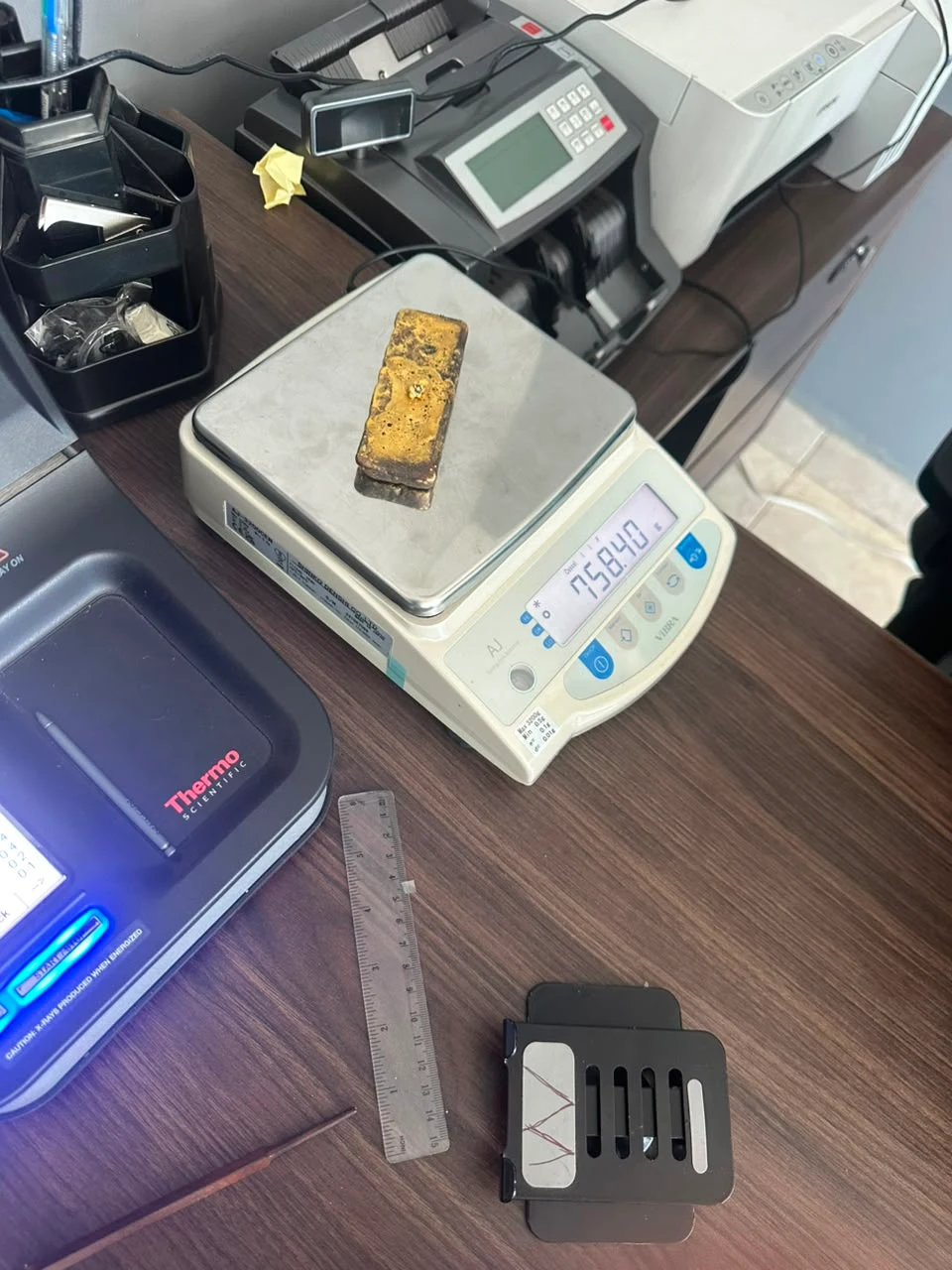
Density is mass divided by volume. For a suitable solid item, mass can be measured directly while volume may be determined from dimensions or by hydrostatic weighing, which uses the change in apparent weight when the item is immersed under controlled conditions.
The calculated density can be compared with relevant physical expectations and with other evidence about the item. The examination is normally non-destructive when the specimen is physically suitable for weighing and immersion.
Density testing alone cannot establish exact gold fineness. Different alloy compositions can have overlapping physical properties, and substitute materials can have densities close to gold. Density is therefore supporting physical evidence, not a definitive purity assay.
Analytical purpose
The method is selected from the material and the analytical question—not from a claim that one technology is best for every sample.
Assess whether measured mass and volume produce a density consistent with the stated physical question.
Add non-destructive physical information for suitable solid bars or bullion items.
Examine suitable solid nuggets while recognising that shape, cavities and attached material affect interpretation.
Combine density with surface elemental, internal structural or analytical testing where appropriate.
Suitability is confirmed against the sample form, expected composition and applicable analytical procedure.
Before testing
Method selection
Different methods provide different kinds of evidence. Complementary testing may be appropriate where one result cannot answer the full question.
Density provides information about an item's overall physical mass-to-volume relationship. XRF provides elemental information from selected surface regions. Ultrasound provides information about internal continuity.
These examinations are complementary and should not be presented as identical tests or as automatic substitutes for representative analytical determination.
Density testing normally preserves a suitable item and offers supporting physical evidence. Fire Assay consumes a representative analytical portion to determine gold under the applicable procedure.
When exact gold content or fineness is required, a density result alone is not a sufficient analytical conclusion.
The analytical result describes the identified sample and stated method. Applying that result to a bar, parcel, shipment or multi-kilogram lot depends on whether the sampling procedure reasonably connects the tested sample to the defined material.
Testing does not by itself establish ownership, lawful origin, seller legitimacy, export authorisation or payment security.
Common questions
It compares measured mass and measured volume to calculate an item's density and provide supporting physical information.
It is normally non-destructive for a suitable solid item, although the item's condition and compatibility with immersion must be reviewed first.
No. Different compositions can have overlapping densities, and density alone cannot establish exact fineness.
It may be used on suitable solid specimens, but irregular shape, cavities and attached material can affect interpretation. One nugget does not represent an entire parcel.
Density answers a physical-consistency question. XRF, ultrasound and representative analytical methods provide different evidence about surface composition, internal structure or gold content.
Gold Testing & Assaying
Use these links to compare the evidence each method can provide before selecting an analytical approach.
Gold Authentication Method
Tell Bilex what material you have, what you need to establish, whether the item must remain intact and how the result will be used. The team will review method suitability and confirm the next step.
Method availability, equipment or partner-facility arrangement, sample requirements, timing and reporting scope are confirmed for the specific enquiry.